 Model photo
Dating Site Safety and Privacy on Emmadate
Dating site safety starts with simple habits you control. Learn how to avoid fake profiles, plan a first date you feel good about, and protect your privacy online, so you can enjoy meeting people with a clear head.
How Profiles Are Checked and Moderated
Dating site safety is a shared job between the service and the people using it. Emmadate sends new members to a partner sign-up page, and that is where account creation, account rules and any prices are set out. We don't make blanket promises about how every profile is screened, because we only want to tell you what we can stand behind.
So here is the honest version. Before you finish signing up, read the partner's terms and privacy information on that page. They describe how accounts are handled, what the rules are for members and how to reach the service. Nobody can promise a scam-free dating experience, which is why the checklist below is written for you: practical checks you can use on any profile, on any dating site.
Look at what each service says about reporting and moderation, and use those tools whenever something feels off.
Read the terms first
Account rules, privacy information and prices are shown on the partner's sign-up page before you finish.
Your checks matter
Use the checklist below on every profile, no matter where you meet someone.
Honest limits
No site can promise a scam-free experience, so we focus on clear guidance you can use right away.
New here? Start at the Emmadate homepage or see how online dating sign-up works step by step.
How to Spot Fake Profiles and Scams
How can I tell if a dating profile is fake? Look for photos that seem too polished or appear elsewhere online, vague or shifting personal details, and pressure to leave the platform quickly. Be most wary of anyone who avoids a video call or asks for money, gift cards or crypto. Several signs together are a clear warning.
Red flags to watch for
- Photos that look too perfect. Studio-style shots, model-like poses or pictures that show up under other names online deserve a second look. A reverse image search takes a minute.
- No video call, ever. Someone who always has an excuse to skip a short video chat may not be who their photos suggest.
- Rushing you off the platform. Pushing to switch to text, email or another app within a day or two is a common pattern.
- Requests for money. Gift cards, wire transfers, crypto, “temporary” loans or help with a bill. Real connections don't begin with a payment.
- Sob stories and emergencies. A sudden crisis, a stuck trip or a sick relative, often right as you start to bond.
- Details that don't add up. Job, age, city or family details that change from one message to the next.
- Links to unfamiliar sites. Skip unknown “verification” pages, investment tips and anything that asks you to log in somewhere new.
- Pressure and urgency. Demands for instant replies, over-the-top flattery too early, or guilt when you take your time.
Healthy signs to look for
- Specific, consistent details about work, hobbies and daily routines.
- Willingness to do a short video chat when you suggest it.
- Comfort with your pace and with keeping early conversations on the platform.
- Questions about you that show they read your profile and remember your answers.
- Respect for a “no” or a “not yet,” without sulking or pressure.
No single sign proves anything. Think of the list as a way to slow down and look closer.
First-Date Safety Tips
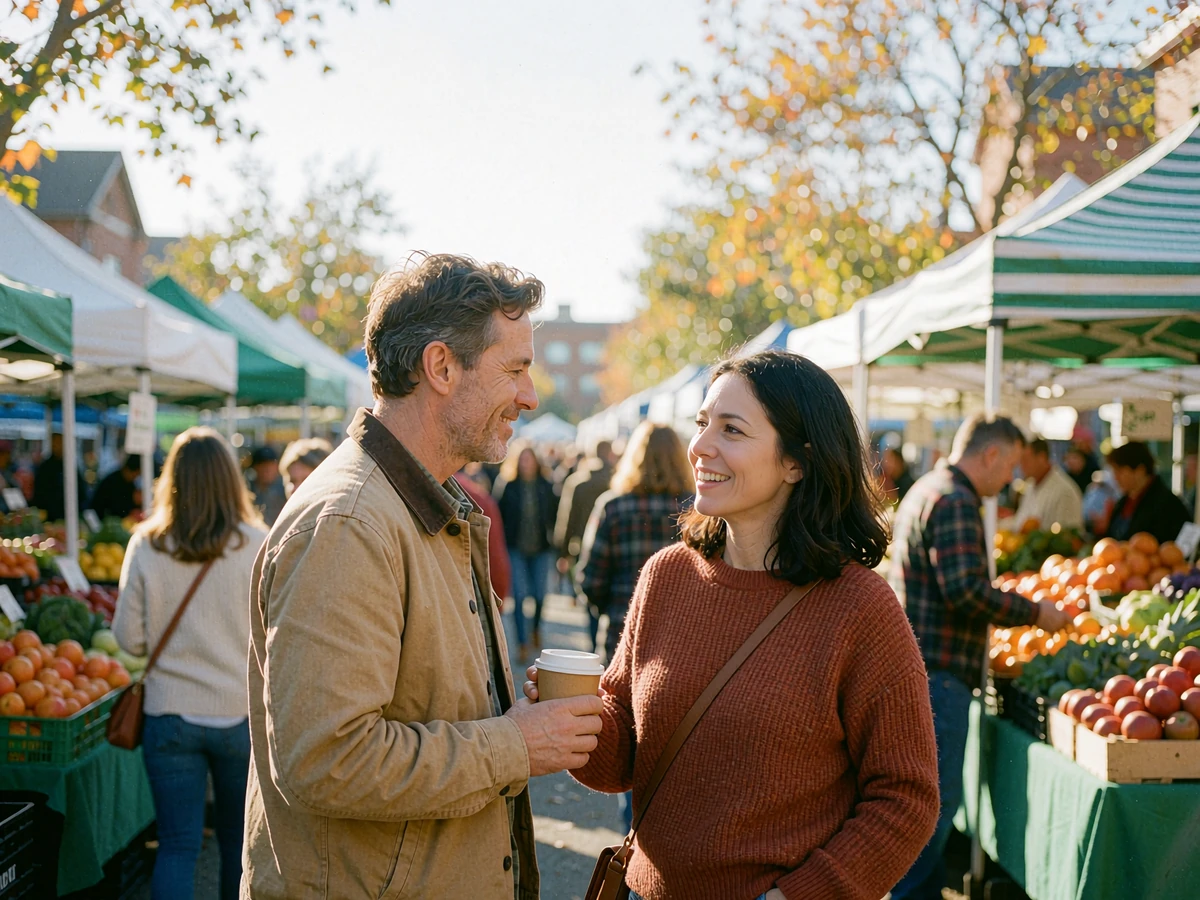
A safe first date is a short, public, daytime meeting where you control the plan. Choose a busy place, tell someone you trust where you'll be, and travel on your own. Meeting this way keeps the pressure low and makes it easy to leave if something feels off. When you're ready to move from chat to a plan, our guide to planning a date after you connect can help.
Before the date
- Do a quick video chat first, so you both know the photos are current.
- Pick a busy public spot in daytime, such as a cafe, a farmers market or a popular park path.
- Tell a friend or family member who you're meeting, where and when, and agree on a check-in time.
- Arrange your own ride there and back. Skip offers of a pickup.
- Charge your phone and bring your ID and a little cash.
During the date
- Keep your drink in sight, and don't accept one you didn't watch being poured.
- Keep personal details light. Your home address and workplace can wait.
- Trust your gut. “I've got to head out” is reason enough to leave.
- Stay clear-headed enough to make good decisions.
After the date
- Text your friend once you're home safe.
- Ask yourself whether they respected your boundaries and your time.
- Take the second date at your own speed, and report anything that crossed a line.
Online Dating Privacy: What to Share and What to Keep
Online dating privacy comes down to two things: what the service does with your data, and what you choose to share. The partner sign-up page presents its privacy terms before you finish registering, so read them and look for answers to three questions: what is collected, who it's shared with, and how you can delete your account. We can't describe the partner's data handling beyond that, and we won't guess.
What you share is in your hands. A few habits go a long way:
- Use your first name only at the start.
- Keep your home address, workplace, daily routine and financial details to yourself.
- Choose photos that don't show your street, workplace or license plate, and that aren't posted across your other accounts.
- Review your account and visibility settings after you sign up.
- Use a strong, unique password, and never share verification codes.
- Keep early chats on the platform until you feel comfortable.
Share more as trust is earned, not before. Privacy isn't being secretive; it's setting the pace.

Safety Features at a Glance
Here is a quick summary of the safety topics on this page and where to find more detail. Some are habits you control, and others depend on the partner's terms shown at sign-up. We list only what we can describe accurately, so you won't find invented badges or guarantees here.
| Topic | What helps | Where to learn more |
|---|---|---|
| Profile checks | Read the partner's account terms at sign-up, then apply the fake-profile checklist yourself. | Spot fake profiles |
| Reporting | Use any report or block option the service offers, and keep screenshots as records. | What to do next |
| Fake-profile warning signs | Watch for reused photos, shifting details, money requests and pressure to leave the platform. | Red flags checklist |
| First-date planning | Meet in a busy public place by day, tell a friend, and arrange your own ride. | First-date tips or how it works |
| Privacy habits | Share less early, review account settings and read the partner's privacy terms. | Privacy guidance |
| Billing clarity | Review prices and terms on the partner's sign-up page before you pay. | Pricing and free vs. paid |
Frequently Asked Questions
Straight answers about catfishing, bots, money requests and billing.
How can I tell if a dating profile is fake?
Look for polished or reused photos, details that change, avoidance of video calls, and pressure to move off the platform fast. Requests for money, gift cards or crypto are the biggest warning sign. A short video chat is one of the quickest checks. If several signs appear, stop replying and keep records. The checklist above explains each sign in more detail.
What is catfishing and how do I avoid it?
Catfishing is when someone builds a profile with false photos or a made-up identity to gain trust, and sometimes money. To avoid it, run a reverse image search on photos, ask for a short video call, and notice stories that keep shifting. Go at your own pace. Real people understand wanting to confirm who they're talking to.
How can I tell if I'm chatting with a bot?
Bots often send generic or copy-pasted messages, reply instantly at any hour, ignore specific questions or push links straight away. Ask something specific about a detail in their profile and see whether the answer fits. Be cautious of anyone who steers you to an outside site or app. If a chat feels scripted, stop replying and report it.
What should I do if someone asks me for money?
Don't send it. A request for money, gift cards, crypto or a wire transfer from someone you haven't met in person is a major warning sign, however sad or urgent the story. Stop replying, save screenshots and report the profile. If you already sent money, contact your bank or card provider right away and ask what options you have.
How do I avoid unexpected charges or billing surprises?
Read the prices and terms on the partner's sign-up page before you enter payment details, and don't buy anything that isn't clear. Note the billing period, renewal terms and how to cancel. Our pricing page explains what's free versus paid, and our full dating site FAQ covers more billing questions.
Want more answers about joining, profiles and billing?
Browse the full dating site FAQDate With Confidence
Good dating site safety is mostly simple habits, clear information and a pace that feels right to you. With those in place, online dating can be a comfortable way to start real conversations. Tap Register free when you're ready, and take it one step at a time.
*Register takes you to our partner's sign-up page.